Heavy Equipment Insurance: How to Choose the Right Coverage
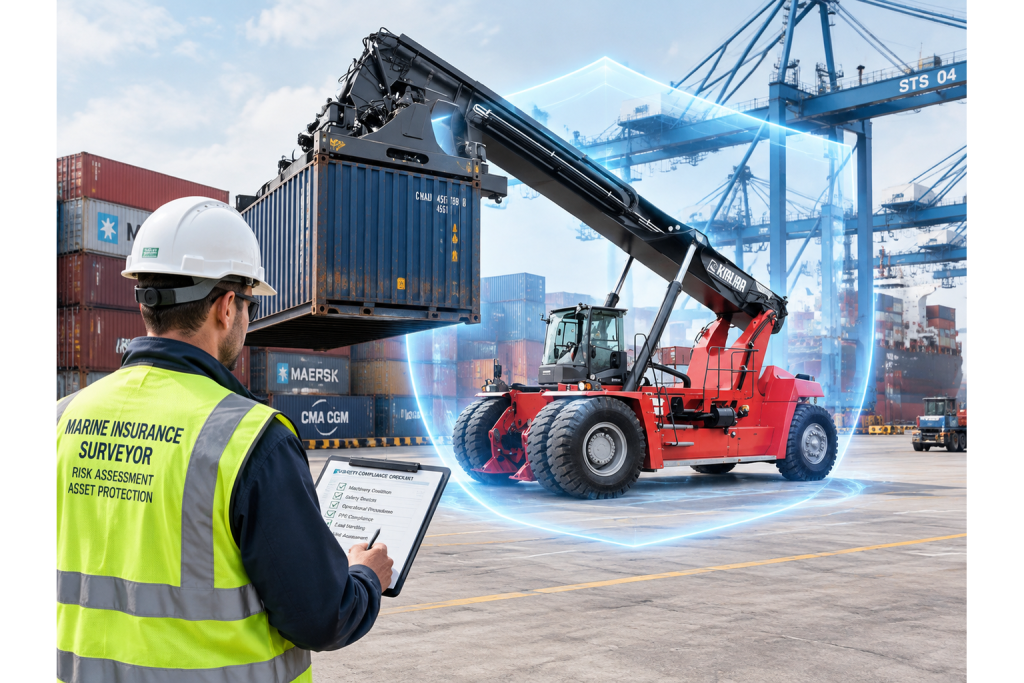
Heavy equipment represents a major investment. Whether you own an excavator, wheel loader, forklift, reach stacker, terminal tractor, crane or other industrial machinery, the right insurance can protect you from unexpected financial losses.
However, not every insurance policy covers every risk. Before choosing a policy, equipment owners should understand where and how the machine is being used.
1.Contractors’ Plant & Machinery (CPM) Insurance
For many types of heavy equipment, Contractors’ Plant & Machinery (CPM) insurance is one of the most important types of coverage.
Depending on the policy, it may protect the equipment against risks such as:
- Accidental damage
- Fire
- Theft
- Overturning
- Collision
- Natural events
- Other specified machinery-related risks
Always check the policy wording carefully, because exclusions and covered risks can vary between insurers.
2. Transit & Marine Cargo Insurance
Heavy equipment is often transported between countries or between ports and project sites.
If you are importing or exporting machinery, consider Marine Cargo / Transit Insurance to protect the equipment while it is being transported.
This can be particularly important for expensive equipment such as:
- Reach stackers
- Empty container handlers
- Terminal tractors
- Forklifts
- Excavators
- Wheel loaders
- Cranes
The owner should confirm exactly when the insurance starts and ends—for example, from the seller’s location, during loading, sea transportation, unloading and final delivery.
3. Third-Party Liability Insurance
What happens if your machine damages another vehicle, building or piece of equipment—or causes injury to another person?
Third-party liability insurance can help protect the equipment owner against covered claims arising from such incidents.
This is especially important when machinery operates in:
- Ports
- Construction sites
- Warehouses
- Factories
- Logistics yards
- Industrial facilities
4. Public Liability Insurance
If customers, contractors, visitors or members of the public can come into contact with your equipment or operations, public liability insurance can provide an additional layer of protection.
For companies operating equipment at their own yard or at customer locations, this coverage should be discussed with the insurance provider.
5. Motor Insurance for Road-Going Equipment
Some heavy equipment can legally operate on public roads, while other machines are designed only for private or industrial areas.
If a machine is registered as a road vehicle or is required to have motor insurance, the appropriate commercial motor insurance should be arranged.
Do not assume that a general machinery policy automatically covers road use.
6. Insurance for Equipment in a Yard or Warehouse
Equipment stored in a yard while waiting for sale, delivery or deployment may require specific coverage.
Owners should tell the insurer:
- Where the equipment is stored
- Whether the yard is secured
- Whether the machines are operational
- Whether customers or third parties have access
- Whether the equipment is owned, leased or held for sale
This information can affect the appropriate insurance arrangement.
What Should Equipment Owners Check Before Buying Insurance?
Before accepting an insurance quotation, ask these simple questions:
- What exactly is covered?
- Is theft covered?
- Is accidental damage covered?
- Is the equipment covered while working?
- Is it covered while being transported?
- Is it covered while stored?
- What is the deductible/excess?
- What are the major exclusions?
- Is third-party liability included?
- Is the insured value based on market value, replacement value or another valuation?
- Does the policy cover the equipment in the countries where it will operate?
One Machine May Need More Than One Policy
A common mistake is assuming that one insurance policy will cover every situation.
For example, a reach stacker may need different protection when it is:
Stored in a yard → Transported by vessel → Delivered to a customer → Operating inside a port.
The risks change at every stage, so the insurance should be designed accordingly.
The Right Insurance Starts With the Right Information
When requesting an insurance quotation, provide accurate information about the equipment, including:
- Make and model
- Year of manufacture
- Serial number
- Current value
- Location
- Intended use
- Operating environment
- Transportation arrangements
- Ownership status
- Previous claims, if applicable
Accurate information helps the insurer assess the risk and offer appropriate coverage.
A Practical Tip for Equipment Owners
Don’t choose insurance simply because it has the lowest premium.
A cheaper policy may have a higher excess, lower coverage limits or important exclusions. For expensive machinery, the most important question is not “How much does the insurance cost?” but:
“If something goes wrong, will this policy actually protect my equipment and my business?”
Before purchasing a policy, have the terms, exclusions, insured value and liability limits reviewed carefully with a qualified insurance professional.
Protect the machine. Protect the investment. Protect the business.
